
Electric Car Scrappage: Everything You Need to Know
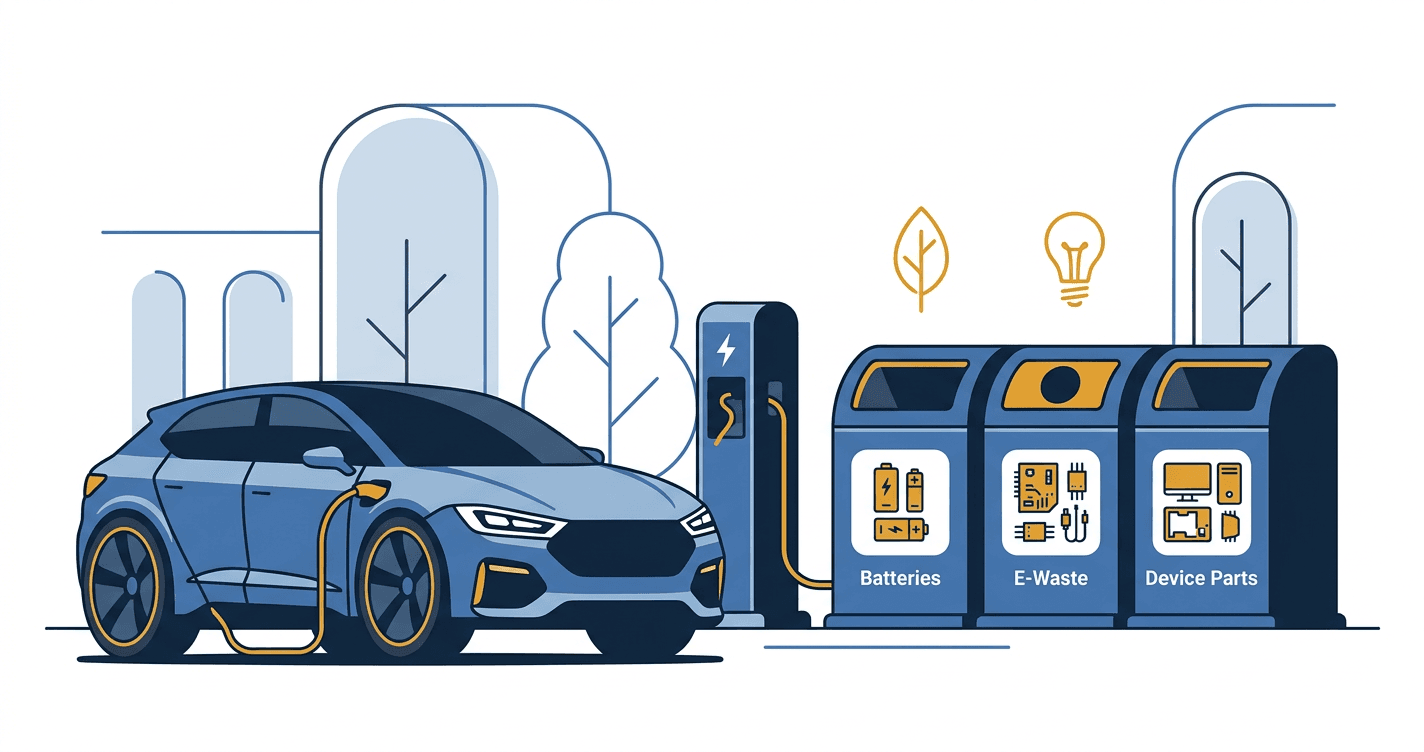
The first generation of mass-market EVs is approaching end-of-life age. The Nissan Leaf launched in 2011. Tesla Model S followed in 2012. These vehicles are now 14-15 years old, and questions about what happens when they reach scrap are becoming genuinely relevant.
How EV Scrappage Differs from Conventional Cars
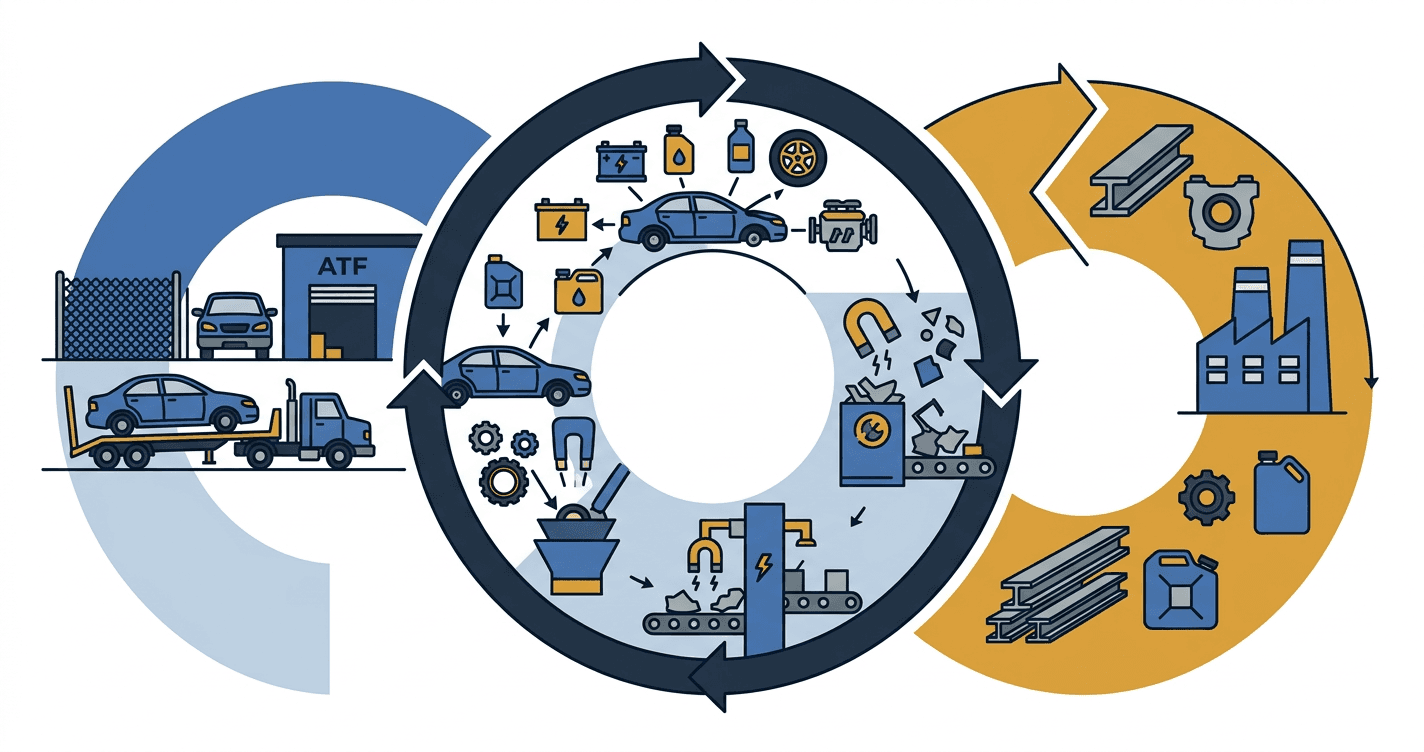
The fundamental process is similar: depollution, parts salvage, then shredding and material recovery. The critical difference is the high-voltage battery pack. A conventional car's 12V lead-acid battery is handled as standard. An EV's traction battery — which might be 40-100kWh, operating at 300-800 volts — requires specialist handling.
→ Our scrap car collection service
→ DVLA notification included as standard
The Battery Question
EV batteries degrade over time — this is well-understood and expected. What's less discussed is what happens when degradation makes a battery unsuitable for continued vehicle use. In many cases, 'worn out' EV batteries still have 70-80% of their original capacity, which makes them suitable for second-life applications.
Battery Second Life
A battery that can no longer meet the demands of an EV's range requirements can still function well as static energy storage — in homes, businesses, or grid-scale installations. The economics of second-life battery deployment are improving as the cost of new batteries falls and the supply of used EV batteries increases.
- –Nissan has partnered with companies to repurpose Leaf batteries for home storage
- –BMW i3 batteries have been deployed in grid storage applications
- –Commercial second-life battery businesses are growing across Europe
- –Your scrap EV's battery may have significant value beyond its scrap weight
Battery Recycling
When second life isn't viable (severe degradation, physical damage, safety concerns), batteries go for recycling. Current EV battery recycling processes recover lithium, cobalt, nickel, and manganese for use in new batteries.
The efficiency of this recycling is improving rapidly. Early processes were energy-intensive and recovered only the most valuable materials. Newer hydrometallurgical processes recover a higher percentage of materials more cleanly. This is an area of active investment — the EU's Battery Regulation 2023 sets increasing minimum recycled content requirements that will drive further development.
Parts Value in Scrapped EVs
EV-specific components can have significant parts value as the EV repair and maintenance market develops. Charging ports, power electronics, heat pumps, and drive motors in good condition are increasingly sought after as existing EVs need repairs.
- –Electric motors — high-efficiency motors have parts market value
- –Inverters and power electronics — expensive to replace new
- –Onboard chargers — useful for repairs
- –Thermal management systems — unique to EVs, not available from conventional scrap
- –Charging ports and cabling — demand growing as EV parc expands
What to Do with a Scrap EV
The process starts the same way as any scrap car: contact a reputable, ATF-licensed facility. When scrapping an EV, also verify that the facility has the specific licensing and equipment to handle high-voltage batteries safely. This isn't something to take on faith.
scrapcar.london can advise on the scrap or salvage options for your EV. Given the evolving market for EV components and battery second life, there may be more value in your end-of-life EV than a straight scrap price suggests.
The Future of EV Recycling
The EV recycling industry is young but growing fast. The volume of end-of-life EVs will increase dramatically through the late 2020s and 2030s as the vehicles sold during the market's rapid growth phase reach end of life. This is driving investment in recycling technology and infrastructure across Europe.
The long-term trajectory is towards a genuinely circular battery supply chain — where the lithium and cobalt in a new battery came partly from recycled old batteries. We're not there yet, but the regulatory framework (EU Battery Regulation) and economic incentive (rising raw material prices) are both pointing in that direction.